
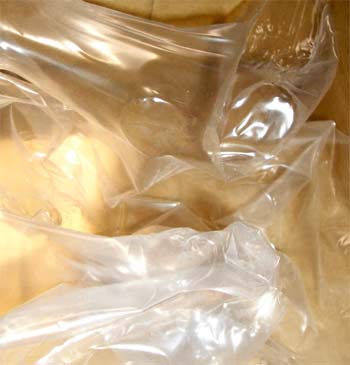
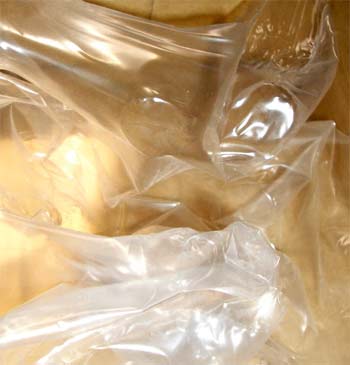
Large volumes of plastic wastes are accumulated on military, merchant and cruise ships. These plastic accumulations pose a problem in that, they need to be stored on-board, unable to be disposed for several months until the destination port is reached. Besides, occupying valuable storage space, accidental or deliberate disposal of these plastics into the sea would remain undegraded for even several thousands of years.
In an attempt to circumvent this problem of accumulation, scientists at the University of Southern Mississippi (USM). have developed a different kind of plastic, that can degrade in seawater, the study being funded by the Naval Sea Systems Command (NAVSEA) which is supporting a number of ongoing research projects aimed at reducing the environmental impact of marine waste.
This type of plastic would soon prove to be a boon to shipping industry. This plastic can be used to make utensils, stretch wrap for large cargo items, food containers and other things used on a cruise. These plastics can be disposed right away into the sea as it takes just 20 days to be degraded under the natural conditions of the sea. Moreover, the constituents that this plastic breaks down into are denser than salt in sea water which implies that the constituents will sink down preventing any possibilities of them, getting washed away to the shores.
These plastics are made of polyurethane that has been modified by the incorporation of PLGA [poly (D,L-lactide-co-glycolide)], a degradable polymer used in surgical sutures and controlled drug-delivery applications. However, scientists in their research expedition are aiming at customizing this basic plastic to more sustainable one that can withstand changes in temperature, humidity and seawater composition; experimenting the with variety of textures like , rubber-like plastics to hard, rigid structures, to suit the intended use.
The plastics are subject to intensive degradation testing at the U.S. Army Natick Soldier Research, Development, and Engineering Center in Natick, and in the Gulf of Mexico at the USM Gulf Coast Research Laboratory in Ocean Springs, Mississippi and the results have been favorable, says study leader Robson F. Storey, Ph.D., a professor of Polymer Science and Engineering at USM. Once the plastic has passed these tests and perhaps after some more modifications if necessary to ensure it is by all means eco-friendly, it should be commercialized.
via : google-sina