

A brilliant engineer from the University of Florida has been working on a novel & brilliant way to make solar energy far more effective & efficient. File this under the “Ground-Breaking Technology” cause it is worth it. To make matters more interesting, this unique way of harnessing solar power with better output is inspired by bugs!
Peng Jiang, an assistant professor in chemical engineering is drawing inspiration from Moths & Cicadas to take existing solar panel technology a few steps forward. Mimicking nature is quite often a very difficult task, if not impossible. To be able to reproduce the craftsmanship of Mother Nature is almost the toughest job on the planet. Yet Jiang has tried to take that very path & has moved a long way forward. So, you ask me how Moths & Cicadas are connected to solar technology. Well, great question folks & I think when I’m done telling the connection to you all, you would be as amazed as I was when I first read this.
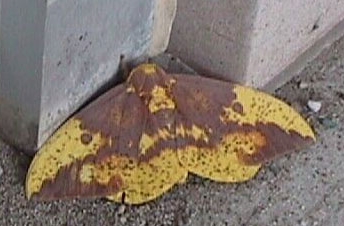
Moths fly & work mostly at nights. Most insects have a compound eye structure. Now if theses were to be placed under some of the most powerful microscopes in the world, you would not only see that they have Hexagonal blocks that make up the eyes, but also are roughly indented. Now all this is putting it in very simple terms. Now these structures are so perfectly placed by evolution that they serve the Moths with a great ability. The eye of the Moth does not glow in the dark (as opposed to the eyes of your pet cat). This is not only because of the Hexagonal structure but also as theses Hexagonal blocks are indented like protruding sharp edges from a smooth surface. This allows the eye to trap nearly all the light on it & not reflect any.
So what has all this to do with solar technology & solar panels? The last statement of last paragraph, of course is what Jiang is trying to achieve. By mimicking the structure, Jiang intends to allow as much radiation of the sun, as possible, to be absorbed by the panel. If reflection is reduced, the efficiency of the cell is automatically maximized. So what is the problem, just go ahead & do it, u say?
Well, the printing technology called Lithography, that allows us to create such surfaces artificially, is too expensive. So what does Jiang do now? Jiang intends to mimic the “nipple-like pattern” using the technology of spin-coating that he developed. This technology is a lot cheaper than Lithography.
Jiang also wants to mimic the wing structure of Cicadas onto solar panels, as the wings of this insect clean themselves with just a sprinkle of water. If this works, then solar panels would be far more efficient & easy to clean. This is indeed a path breaking idea. Jiang has done awesome work so far. He has reduced reflection of light to less than 2%, from the normal 10% mark of solar panels. Now, only if he can integrate this to large scale industrial development.
It was great to know that people are going back to nature for inspiration. I always believed that in the abode of nature lay the real wealth of knowledge. Yet, some people
Think they are really smart & try out-smarting nature. Well, too bad for them as they are outs-smarting themselves to doom. I hope this project goes on to become a major success. Wishing Jiang & his team all the best- keep up the great work guys!