
Wind turbines are common and you get to see them installed on the outskirts of your town. The main problem in the approach is that wind speed is not constant at ground level so the power output of these turbines cannot be estimated beforehand.
A better option is to float these turbines in the jet stream that is 15,000 to 30,000 feet, where high speed winds are common. Two companies have developed their prototypes that surely have enough mettle to solve the energy crisis.
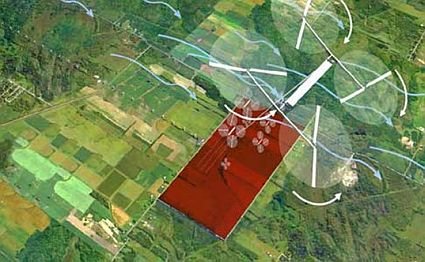
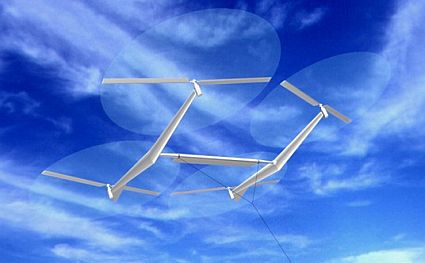
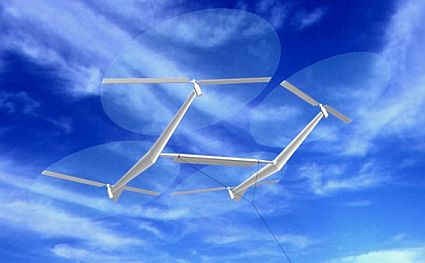
Sky WindPower and Magenn Power are both developing high-altitude wind generators. Sky WindPower is developing a kite-like 1,100 pound structure named Flying Electric Generator, which has four different sets of rotors atop an H-shaped platform. The machines will be able to produce electricity at the rate of two cents per kilowatt hour and will fly between 15,000 and 30,000 feet. The energy generated will then be transmitted to the ground through aluminum cables attached to the frame.
Sky WindPower wants to install these machines in a 200-square-mile area with a restricted airspace so that no Boeing 747 collides with them. Turbines will be constructed from aircraft material and would hold four 130-foot-diamter rotors and will weigh a whooping 45,000 pounds. These machines would function just like a chopper on lift-off, once they are in jet stream the machine would stabilize itself and the wind energy will keep it in air.
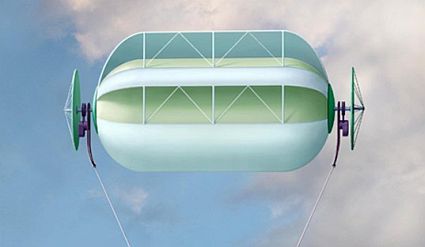
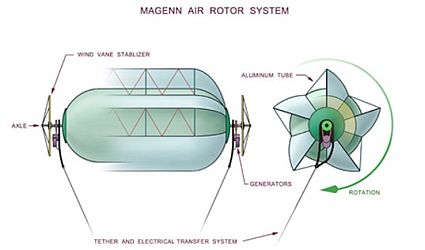
Another prototype is being developed by a Canadian company named Magenn Power. They have developed a generator named the Magenn Power Air Rotor System or M.A.R.S. This machine is filled with pure helium, helium being lighter than air will keep the turbine floating in air. It consists of a generator that rotates around a horizontal axis, similar to a conventional wind turbine. It too makes use of aluminum cables to get the generated power back on the ground. This energy can then be routed to a grid, stored in a battery or can be used directly. Unlike the high flying FEG, the M.A.R.S flies at a height of just 600 to 1,000 feet and works with speeds from 4 mph to greater than 60 mph.
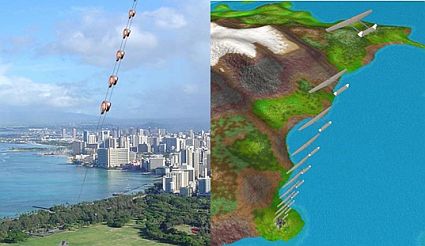
Another idea is to develop a series of kitewings connected to rotate in a loop which generates energy, electricity is again brought to the ground using a tethered aluminum cable.
These machines surely show good prospects on paper, but once they are finished and ready for deployment it would be interesting to see how much they perform.
Via: Inhabitat