
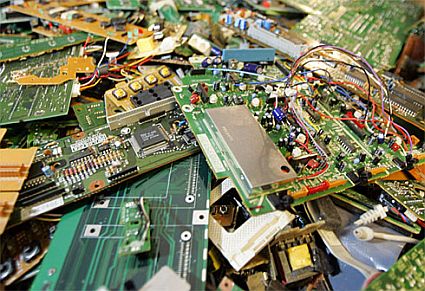
Electronics is one of the many industries that produce and use chemicals that are harmful for human health and even the environment. The Dell Latitude D630 laptop contains mercury, a metal that can damage the nervous system. It contains hundreds of parts but sadly, none of them is made from recycled material, yet we can say that it is one of the most eco-friendly notebooks in town. The reason for this is that the notebook does not contain lead, PVC and other nasty chemicals that are commonly found in PCs.
The good thing is that the electronics giants have started to think about the ill effects of using such chemicals in their products. The industry is now using some environment friendly products that can change the future and can make is greener than it is today. Dell has announced that the company will strive to become the greenest technology company. For this, they are increasing their recycling program and are thinking of developing green computers. Cupertino giant Apple has also shown some interest in becoming green. Similar is the case with Panasonic, Motorola and Sun Microsystems.
These companies would have taken all these initiatives a decade or so if their customers wanted to have green products. Till date, no one thinks about the green aspect of a product before buying it, no one wants to recycle their cellphone because they want to save the money they will have to shell to send the cell back to the manufacturer for recycling. All industries are customer powered; manufacturers will do anything that is desired by their customers.
It’s not just the direct impact of some chemicals that can ruin the greenery on Earth, some chemicals are safe when inside the cabinet of your electronic gadget, but once out they can pose a grave danger not only to Earth but also to human health. Any old TV would contain at most 4 pounds of lead, it is safe when it is inside the product but once it is disposed in open, it leaks out and seeps underground, there it can blend with water and harm all people who use the same water for drinking.
Steps to make electronics greener:
Electronics cannot be made green in a day or for that matter not even in a year. It depends on how much a company thinks about the Earth and also on what their customers desire. Here are a few steps that can help increase the efforts of electronics giants.
Use Eco-Friendly Products:
The best way to make electronics green is by reducing the amount of hazardous chemicals in electronics. Panasonic spent six-years and $75 million in developing a lead free solder. This may seem too much but lead solder is hard to duplicate since it has a relatively lower melting point and if some other material is used then there is a fear that it might melt the chip on a high temperature.
Another such product is PVC and BFRs. BFR is a material that prevents overheated circuit boards from catching fire. Apple has now pledged to remove the use of PVC and BFRs from its products by the end of 2008, Dell and Toshiba will do that by the end of 2009.
Recycle as much as possible:
Recycling is another option to prevent any further damage to the environment. Some companies such as Motorola are already running recycling programs. All Motorola cells come with an envelope that customers can use to send cell phones back to the company for recycling. Still after doing so much, Motorola receives just 3% of the cells which they sell. Many heavy product manufacturers feel that sending products back to them to recycle will result in an unnecessary burden on the manufacturers. Shipping a TV would cost more than $100 and another $60 would be spent on their recycling. They feel that such tasks should be carried out by the local administration.
Conserve Energy:
Apart from just making eco-friendly products, manufacturers should also think about ways by which their manufacturing procedure can be made energy-efficient. Companies like Toshiba have already started to work on this. They now use low-power fluorescent bulbs instead of the normal lighting systems to save energy. Sharp has a giant solar panel installed that provides a third of its total power requirements.
Companies are working to make products and their manufacturing processes as green as possible, but still the procedure cannot become completely green unless and until we buy products that are green to the core.
Via: USA Today