
Eco Factor: Scientists discover new catalyst that can enhance ethanol’s oxidation.
Hydrogen fuel cells are taken as the most feasible fuel cells that can fuel the world long after fossil fuels are no longer to be seen. However, the production and transportation of hydrogen is not as efficient as it needs to be. Without waiting for technology to improve and make hydrogen a safe and readily available fuel source, scientists at the U.S. Department of Energy’s Brookhaven National Laboratory have developed a new electrocatalyst that could make ethanol-powered fuel cells more feasible than their hydrogen counterparts.
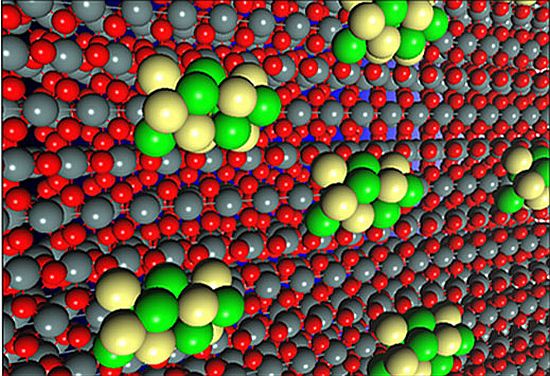
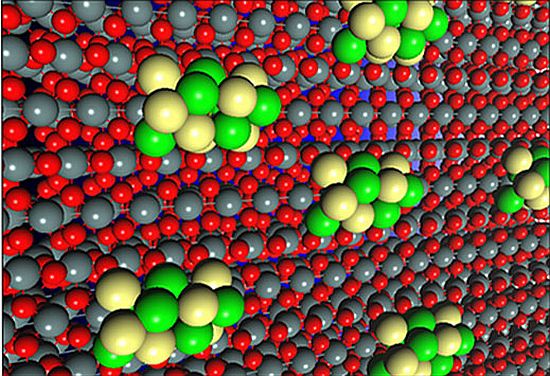
Ethanol has always been one of the most ideal reactants for fuel cells, however, ethanol’s slow and inefficient oxidation has been a major hurdle. Scientists till date have been unable to find a catalyst that can break ethanol ions into hydrogen ions needed for electricity generation. Scientists at the Brookhaven National Laboratory have now discovered a new electrocatalyst that can break carbon bonds at room temperature and efficiently oxidize ethanol into carbon dioxide as a main reaction product. This electrocatalyst made from platinum and rhodium atoms on a carbon-supported tin oxide nanoparticle eases hydrogen production by efficiently oxidizing ethanol ions. Scientists are now in a position to test the new catalyst in a real fuel cell in order to observe the unique characteristics.
The Dark Side:
Unlike hydrogen, ethanol is not a 100% clean fuel source. Moreover, the production of ethanol from crops has always been criticized all over the world.
Via: Physorg