
Eco Factor: Batteries made from organic materials.
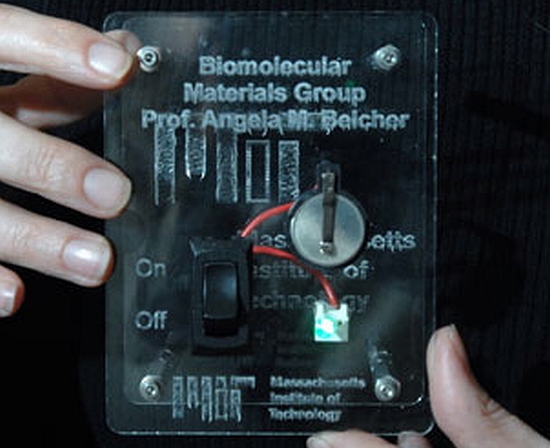
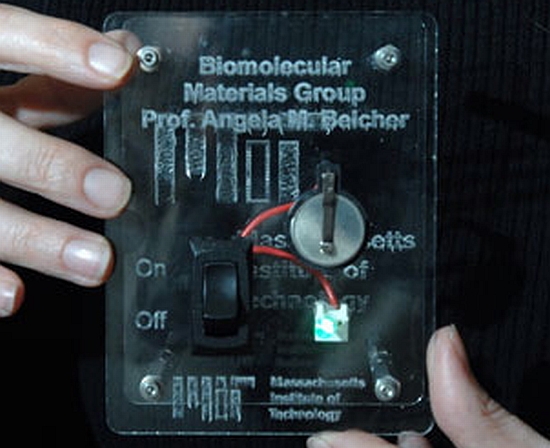
Researchers at MIT have developed a new technique by which lithium-ion batteries could be made green, without showing any effect on the overall capacity and performance of the cells. The researchers have shown that they can genetically engineer viruses to build both positive and negative charged ends of a lithium-ion battery. This new technology can be used to build batteries of different sizes which can be used in everything from an iPod to an electric car.
These new batteries could be manufactured with a cheap and environmentally benign process. The synthesis takes place at and below room temperature and requires no harmful organic solvents, and the materials that go into the battery are non-toxic. The virus used in the process, bacteriophage, is infectious for bacteria, but is harmless to humans. Using the new materials, the researchers found that the batteries could be charged and discharged at least 100 times without losing any capacitance.
The Dark Side:
The tests haven’t been conclusive enough for mass production. Conventional batteries are charged and discharged thousands of times without having much effect on the capacitance. However, the batteries are just tested for 100 charge/discharge cycles.