
 Various scientific studies and practical insights over the last two decades or so in waste water treatment efforts, have revealed, that algae fuel might be a next best alternative to fossil fuel in the coming decades. Nevertheless, the increased capital and operating costs to extract fuel combined with other scientific outcomes are major deterrents in its mass production. Current studies, however, reveal that these deterrents can be removed to produce commercially viable renewable biofuel at a large scale by commercializing one of the seven varieties of algae found in roman baths. Owing to its easy harvesting at favorable temperature and rich oil content, these algae could just be the next big option for fuel production.
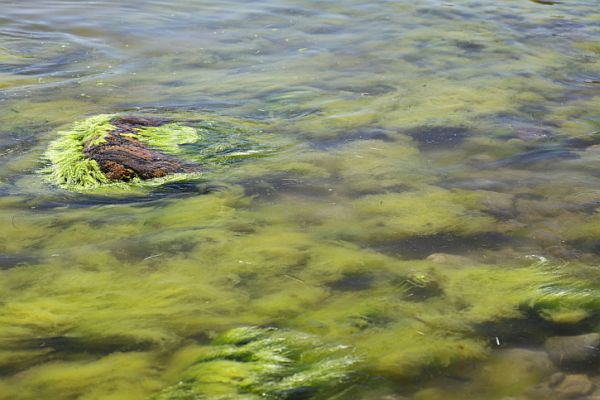
Algae, which is, a natural deposit, freely found in sewage canals and waste-water, could be the key to the successful development of biofuels as well as an efficient means of recycling atmospheric carbon dioxide. It yields oil as part of the outcomes from the process of photosynthesis. One of the main hindrances in oil extraction from common algae is that its cell walls are difficult to break, making it an energy intensive process. Moreover, the filtering of the algae becomes cost intensive if the oil content is not ample to support the technological cost. Harvesting algae for oil can be achieved only when the process is economically feasible in a large scale context. PhD student Holly Smith-Baedorf, who is working on the project at the University of Bath with Professor Rod Scott said that “there is a particular algae species among the seven identified in the Roman Baths which are well adapted to grow at higher temperatures and also suitable for producing sufficient amount of biodiesel to make wide-scale production viable.” While looking out for a certain species of algae that has a weaker cell wall and high oil content, the team came across a species found in the waters of the Roman baths. Currently they are trying to reproduce the algae collected from the baths in commercially viable quantities.
Considering the fact that algae grows even better when fed with extra organic materials found in sewage along with carbon dioxide, which is one of the main greenhouse gases, its side-effect in large scale harvesting might have far-reaching ecological effects. Hence, if algae could produce sufficient quantities of biofuel, it is bound to solve other environmental problems too in the reflex. Moreover, if algae, which thrives on our waste products, is used to produce something valuable, the main principle of industrial ecology will also get a major impetus.
Via: RedOrbit